

How to Prepare for TCS NQT Dec 2025 in the Last 30 Days
Thirty days can feel terrifying and thrilling at the same time. On one side, there’s the fear of “What if I don’t make it?”, and on the other, there’s the quiet hope that this attempt could completely change your life. TCS NQT DEC 2025 sits right at that crossroads. One focused month can turn all the late‑night doubts, campus pressure, and family expectations into a real offer from TCS and other top recruiters.
For this cycle, the TCS National Qualifier Test is scheduled around late December 2025 (for many drives, students are seeing exam dates like 25 December 2025 in notifications), with registrations typically closing about 10–15 days before the test. The exam is open to UG, PG, and Diploma students (final year or recently graduated), generally 18+ in age, with most roles expecting a consistent academic record (around 60% / 6 CGPA and limited gaps).
Streams like B.E/B.Tech/M.E/M.Tech/MCA/M.Sc and other related disciplines get direct access to tech roles, while other degrees can still use NQT scores for suitable profiles. In simple words: if you are in your final year or recently passed out and meet your college’s usual IT‑placement standards, you almost certainly fit the criteria.
Instead of letting these 30 days slip away in anxiety and random prep, you can turn them into a clear, aggressive plan: sharpen only what matters, practice with intent, and walk into the exam knowing you squeezed the best out of this window.
What TCS NQT Will Actually Test You On
With limited days left, clarity is your biggest weapon. TCS NQT is not just “aptitude + coding”; it is a structured exam with clearly defined skill areas:
- Foundation part
- Numerical ability (quant, DI, basic maths)
- Verbal ability (English comprehension and grammar)
- Reasoning ability (puzzles, logic, patterns)
- Advanced part (for higher‑end tech profiles)
- Tougher aptitude and reasoning questions
- Coding problems that test how you think, not just how you memorize syntax
Your preparation should mirror this structure: every day must touch at least three pillars – quant / reasoning, English, and coding.
30‑Day Structure: Calm the Mind, Tighten the Plan
A simple, realistic way to break these 30 days:
- Days 1–10: Repair and rebuild basics
You stop fearing topics. You revise formulas, grammar rules, and coding syntax. You get comfortable with the pattern instead of being surprised by it. - Days 11–20: Speed + mixed practice
You stop doing “only percentages” or “only puzzles” in isolation. You move to mixed sets and timed practice like the real exam. - Days 21–30: Full mocks, revision, and execution
You focus on what converts marks: mocks, analysis, and targeted revision. No more new chapters. Only sharpening.
Even if you start today with many weak areas, this structure can stabilise your preparation and give you momentum.
Section‑Wise Approach for the Next 30 Days
Numerical Ability
This section decides a lot of your confidence early in the paper.
- Must‑cover chapters: Percentages, Profit & Loss, Ratio and Proportion, Averages, Time & Work, Time–Speed–Distance, Simple/Compound Interest, basic Probability, Permutation–Combination, and Data Interpretation.
- How to prepare now:
- First 10 days: learn/revise core formulas, then do 20–30 targeted questions daily.
- Next 10 days: switch to mixed practice under a timer.
- Last 10 days: mostly previous‑pattern or mock‑style questions.
Treat every solved question as an investment: you’re not just solving a sum, you’re training your brain to react faster on exam day.
Verbal Ability
This is where many students “assume” they’re fine and then lose easy marks.
- Key areas: Reading Comprehension, grammar (tenses, subject–verb agreement, prepositions, articles), sentence improvement, error spotting, jumbled sentences, basic vocabulary.
- Plan for 30 days:
- Every day: 1 short RC + 15–20 grammar/vocab questions.
- Move quickly from learning rules to doing full verbal sections from mocks.
Think of verbal as your “stability” section: clean, accurate attempts here can rescue you if quant or coding feels shaky.
Reasoning and Puzzles: Where Calm Thinking Wins
This section rewards composure.
- Important topics: Seating arrangements, puzzles, blood relations, directions, coding–decoding, syllogisms, data sufficiency, statement–conclusion, pattern / visual reasoning.
- How to attack:
- Initially, do one main topic per day (for 8–10 days).
- Then move to mixed sets where puzzles, directions, and coding–decoding appear together under time pressure.
- In the final week, focus on types you still find slow or confusing.
Whenever you solve a puzzle, don’t just celebrate the answer; ask, “How could I have drawn this faster? Where did I waste time?” That reflection is what gives you a real edge.
Coding: The Deciding Factor for Tech Roles
When recruiters look at tech candidates, the coding section often becomes the differentiator.
- Core areas:
- Arrays and strings (reversal, rotations, frequency maps, searching, subarrays)
- Basic algorithms (sorting, simple searching, recursion)
- Simple data structures (lists, stacks, queues, basic maps/dictionaries)
- Implementation‑style problems (patterns, text processing, numeric logic)
- Practical 30‑day coding plan:
- Choose one language and stick to it (C, C++, Java, or Python).
- Days 1–10: 1 easy problem daily + revising syntax and basic library functions.
- Days 11–20: 2 problems daily (1 easy, 1 medium); start solving in fixed time slots.
- Days 21–30: exam‑style practice – 1 medium problem in ~30–40 minutes, including debugging.
Make a habit of manually checking your code with edge cases (empty input, single element, max/min values). Most lost marks in coding come from missing these, not from “hard logic”.
The Professional Edge -Mastering Work ethics for success
How to Use Mocks Without Getting Demotivated
Mocks are not a judgement of your worth; they are a rehearsal room.
- Aim for 4–6 full‑length tests across the 30 days, more concentrated in the last two weeks.
- After each mock:
- List 3 topics that cost you the most marks.
- Note 3 questions you could have solved but left due to panic or time mismanagement.
- Check if you’re always weak in the same area (e.g., RC, probability, puzzles, or string coding).
Then, spend the next 1–2 days attacking exactly those weak areas. That loop – mock → analysis → focused practice – is where the real jump in scores happens.
Daily Timetable Snapshot (You Can Tweak It)
If you can give 5–6 hours a day:
- 1.5 hours – Quant (including some advanced‑level questions)
- 1 hour – Reasoning
- 1 hour – Verbal
- 1.5–2 hours – Coding
- 15–20 minutes – Revision of formulas, notes, and past mistakes
If you have less time, use this priority order:
- Coding
- Quant
- Reasoning
- Verbal
This doesn’t mean verbal is unimportant; it just reflects where technical cut‑offs and shortlisting pressure are usually highest.
Handling Fear, Expectations, and Self‑Doubt
No one talks enough about this part, but it silently controls performance:
- You might feel behind when you see others posting about “10th mock already done”.
- You might worry about being the first engineer in your family, or the only earning hope.
- You might replay past rejections in your head.
All of this is real, but none of it has to stop you. Treat every day from now till the exam as a promise to yourself, not to anyone else. You are not required to be perfect; you are required to be disciplined.
Small victories matter: finishing a topic you always avoided, finally solving a medium coding problem alone, improving mock accuracy by even 5–10%. Collect these wins – they are proof that you’re moving.
TCS NQT is not just an exam; it is a chance to walk out of college with clarity, stability, and pride. With roughly a month left, you still have time to reshape your preparation story – from scattered and anxious to structured and purposeful.
Use each day to do three things:
- Strengthen at least one concept.
- Attempt at least one question that scares you a little.
- End the day knowing tomorrow’s exact plan.
You don’t need to know everything; you just need to be better than you were last week. If you want, you can share your strongest and weakest sections along with how many hours you can study daily, and this plan can be converted into a precise, day‑by‑day schedule tailored to you.
- Placement & Internship opportunites2026

The year 2026 is set to be a competitive yet rewarding year for students looking for full-time placements and internships. With global companies, IT firms, startups, and consulting giants actively hiring, students must stay updated about hiring trends, eligibility criteria, and application deadlines. In this article, you will learn about: Top companies hiring for placement & internship in 2026, application process & eligibility criteria, month-wise hiring calendar and tips to maximize your chances of selection Whether you are an engineering, management, commerce, or arts student, this article will help you navigate the job & internship landscape for 2026 effectively.
Placement & Internship Calendar 2026
Month Internship Offers Placement Offers Special Hiring Events January Google, Microsoft, Amazon (Summer Internships) Off-campus hiring (TCS, Wipro, Infosys) TCS NQT, Wipro Elite NTH February McKinsey, Goldman Sachs, JP Morgan (Finance Internships) Accenture, Cognizant, Capgemini hiring CodeVita, HackWithInfy March Flipkart, Uber, Cisco (Tech Internships) Amazon, PayPal, Zoho (Product Hiring) Flipkart GRiD, Amazon WOW April HUL, Nestlé, Tata (Marketing & Sales Internships) Deloitte, KPMG, EY (Consulting) Goldman Sachs Engineering Hiring May IBM, Adobe, Qualcomm (IT Internships) Late hiring from Infosys, Capgemini HackerRank Hiring Contest June TCS, Cognizant, Wipro (IT Services Internships) Google, Microsoft, Adobe (Final Hiring) Google Summer of Code July Zomato, Razorpay, Paytm (Startup Internships) Infosys, TCS Digital, Accenture hiring Infosys HackWithInfy August Uber, PayPal, Amazon (Final Internship Hiring) Late-stage startup hiring Flipkart APM Program September Morgan Stanley, JP Morgan (Finance) Google, Microsoft, Facebook (Product Hiring) McKinsey & BCG Hiring October Last Internship Calls Last on-campus placements Google APAC Hiring November Startups & Late PPOs Final MNC recruitment Google Winter of Code December Internship Pre-Placement Offers (PPOs) Last Off-Campus Drives Late-stage startup hiring Top Companies Offering Placements & Internships in 2026
IT & Software Companies
Company Internship Offers Placement Offers Hiring Process Google Summer Internship (STEP, SDE) Software Engineer, AI Engineer Google APAC, Coding Tests Microsoft Engage Program Software Engineer, Data Scientist Online Assessment + Technical Interview Amazon SDE Internship Software Development Engineer Amazon WOW, CodeAgon TCS TCS Smart Internships TCS Ninja, TCS Digital TCS NQT, CodeVita Infosys InfyTQ Internship Systems Engineer InfyTQ Exam + Interview Accenture AI & Cloud Internships Associate Software Engineer Cognitive & Coding Tests 
For students aiming to secure jobs outside traditional placement models, the Off Campus Placements Secret E-Book provides clear and structured guidance.
Finance & Consulting Firms
Company Internship Offers Placement Offers Hiring Process Goldman Sachs Summer Internship Program Analyst, Associate Roles Aptitude Test + Superday Interviews JP Morgan Finance & Risk Internship Investment Banking Analyst Online Test + Group Discussion Deloitte Business Analyst Internship Associate Consultant Deloitte Aptitude Test McKinsey Summer Business Analyst Management Consulting McKinsey Problem Solving Test EY & KPMG Audit & Tax Internships Risk & Consulting Associate Online Test + Case Study FMCG, Marketing & Sales Internships
Company Internship Offers Placement Offers Hiring Process Hindustan Unilever (HUL) Unilever Leadership Internship UFLP Program Case Study + Interview Nestlé Digital Marketing Internship Sales & Marketing Executive Aptitude + Interview PepsiCo Consumer Insights Internship Business Development Manager Business Case + GD P&G Summer Brand Internship Marketing Associate P&G Hiring Test Startups & Unicorns Hiring in 2026
Company Internship Offers Placement Offers Hiring Process Zomato Product Management Internship Product Manager Zomato Live Business Challenge Razorpay Software Development Intern Full-Time SDE Coding + HR Rounds Paytm Digital Marketing Internship Business Analyst Business Case Study Meesho UI/UX & Tech Internship Product Designer Portfolio Submission + Interview How to Apply for Placements & Internships in 2026
1. Apply Through Official Career Portals
- Visit the company’s official website.
- Look for “Careers” or “Jobs” sections.
- Apply early before deadlines close.
2. Use LinkedIn & Job Portals
- Best platforms for internships & fresher jobs:
- LinkedIn Jobs – Network & apply for referral-based roles.
- Naukri.com & Indeed – Great for freshers applying for IT & finance roles.
- Internshala & AngelList – Best for startup internships.
3. Participate in Hiring Challenges & Hackathons
- Companies like Google, Amazon, Flipkart, and Microsoft conduct coding challenges to shortlist candidates.
- Platforms to Participate:
- Google Kick Start
- Amazon WOW
- TCS CodeVita
- Flipkart GRiD
Tips to Maximize Your Selection Chances
- Start Applying Early: Most internship offers open in January and close by March.
- Optimize Resume & LinkedIn Profile: Use keywords & highlight projects.
- Prepare for Online Assessments: Focus on aptitude, DSA, and case study rounds.
- Network for Referrals: 80% of jobs are filled through employee referrals.
- Improve Soft Skills: Work on communication, teamwork, and problem-solving skills.
- Mock Interviews: Practice behavioral & technical interview rounds before the final call.
The 2026 placement & internship season is full of exciting opportunities. Whether you’re aiming for tech, finance, marketing, or consulting, preparation is key to success.
Start early, network aggressively, and be consistent!
Need help with job updates or career guidance? Drop a comment below!
Students preparing for placements and internships in 2026 can strengthen their readiness with insights from The Professional Edge E-Book, designed to bridge the gap between academic learning and industry expectations.
- How Zoho Prepares Students for AI-Era Placements

Every student dream of getting placed in a good company — but in today’s digital world, getting placed requires more than just marks.
Employers now look for practical skills, teamwork, and digital know-how. That’s where Zoho, India’s homegrown tech giant, comes in.Zoho isn’t just software — it’s a powerful learning and career-building platform.
If you learn how to use Zoho tools during college, you can impress recruiters, manage projects like a pro, and step confidently into your first job.At College Placement, we help students prepare for placements in smarter, more digital ways.
In this blog, we’ll explore how Zoho can make you placement-ready, career-smart, and industry-relevant — even before graduation.What is Zoho?
Zoho is an Indian software company that builds over 50 apps for businesses — from managing projects to sending professional emails. It’s used by companies, startups, HR professionals, and even universities worldwide.
Here are some of the most popular Zoho apps every student should know:
Zoho App What It Does Why It Matters for Students Zoho Recruit Used by HRs for hiring Learn how recruitment actually works Zoho Projects For managing tasks and deadlines Improves teamwork and time management Zoho Analytics For data reports and dashboards Develops analytical thinking Zoho Books For managing accounts and invoices Great for commerce and business students Zoho Mail & Workplace Professional communication suite Helps you learn business email etiquette Zoho CRM Manages clients and sales Useful for marketing and MBA students Why College Students Should Learn Zoho
1. It Makes You “Corporate-Ready”
In interviews, recruiters look for students who understand how modern workplaces function.
Zoho tools are used by companies daily — if you already know them, you’re one step ahead.Example:
Knowing Zoho Projects shows you understand deadlines, task tracking, and collaboration — key skills in any job.2. It Strengthens Your Resume
Most students list only Microsoft Word or Excel under “Technical Skills.”
But adding Zoho Recruit, Zoho Analytics, or Zoho CRM shows that you’ve learned real-world business tools. That immediately makes your resume stand out.3. It Helps You Manage College Projects Professionally
Instead of coordinating your final-year project over WhatsApp or messy Excel files, you can use Zoho Projects.
You can assign roles, track deadlines, upload documents, and even present project progress like a real manager. That’s the kind of experience recruiters love hearing about.4. It Improves Your Communication Skills
With Zoho Mail and Zoho Writer, you can learn how to:
- Write professional emails
- Create neat, corporate-style reports
- Collaborate with teammates efficiently
Remember, communication is one of the top skills recruiters look for during placements.
5. It Helps You Understand Data
Whether you’re an engineer, BBA, or BCA student, data is the new language of business.
With Zoho Analytics, you can create dashboards, charts, and reports — a must-have skill for analytics, marketing, or product roles.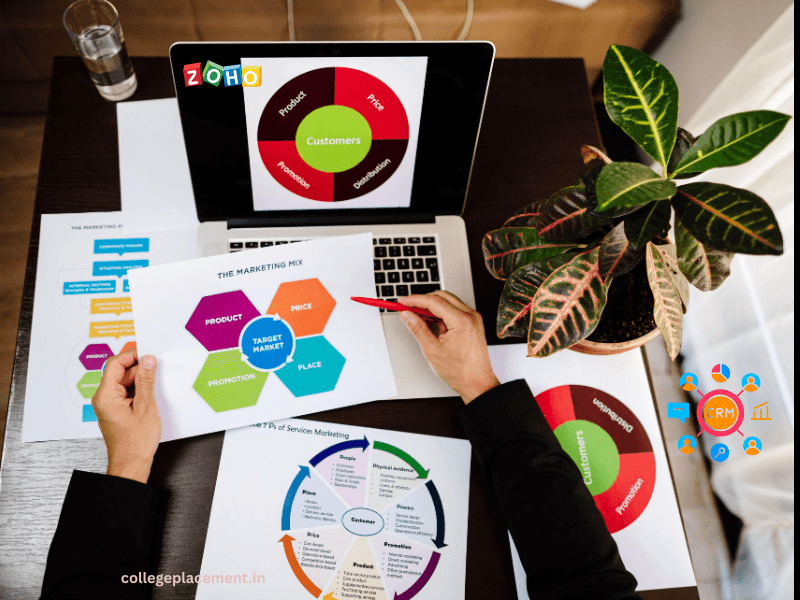
Zoho Learning Opportunities for Students
Zoho offers free ways for students to learn, experiment, and even get certified.
1. Zoho Schools of Learning
Zoho runs a one-of-a-kind program where students learn by doing — no fancy degrees required.
They focus on coding, communication, and problem-solving, and even hire directly from the program.Visit: https://www.zoho.com/schools/
2. Free Online Certifications
You can learn Zoho apps through Zoho Academy or YouTube tutorials.
After completing the course, you get a verified certificate you can add to your LinkedIn and resume.Popular certifications:
- Zoho CRM Certification
- Zoho Projects Management Course
- Zoho Analytics Fundamentals
3. Hands-On Practice
Zoho offers free versions of most tools.
You can sign up, create your own mock project, and practice daily.Example:
Start a mini project using Zoho Projects and showcase it in your placement interview as proof of your teamwork and planning skills.Zoho and AI: The Future of Jobs
Zoho is not just keeping up with AI — it’s leading the change.
Its AI assistant, Zia, can analyze data, summarize emails, and even predict trends.Learning Zoho means understanding how AI is changing workplaces.
That gives you an advantage when companies look for AI-aware employees who can work with smart tools.Real-World Skills You’ll Gain from Zoho
Skill Zoho Tool How It Helps in Placement Teamwork Zoho Projects Manage and deliver college projects Data Analytics Zoho Analytics Analyze placement or project data Communication Zoho Mail Write professional emails HR Awareness Zoho Recruit Understand hiring and selection Time Management Zoho Planner / Projects Handle tasks efficiently Reporting Zoho Writer Create structured reports How to Start Learning Zoho (Step-by-Step)
- Go to Zoho.com
Explore different tools — CRM, Projects, Recruit, etc. - Create a Free Account
Sign up with your college email ID. - Pick One Tool to Master
For example, start with Zoho Projects or Zoho Recruit. - Watch Tutorials
Zoho’s YouTube and official academy are full of step-by-step videos. - Work on a Real Project
Apply what you learn — manage a group project or analyze some data. - Add It to Your Resume
Mention your Zoho experience under “Digital Tools” or “Technical Skills.”
How Zoho Can Help in Placement Preparation
Let’s say you’re preparing for placements in marketing.
Here’s how Zoho can help:- Use Zoho Analytics to study market data or consumer surveys.
- Use Zoho Mail to communicate professionally with potential employers.
- Use Zoho Projects to organize your internship reports.
- Use Zoho CRM to understand how companies handle customers.
By the end of this, you’ll not only have placement knowledge but also hands-on corporate skills.
Key Benefits of Learning Zoho During College
- Builds your digital profile
- Makes your resume industry-ready
- Adds practical experience to your LinkedIn
- Prepares you for internships and jobs
- Helps you understand how companies operate
Frequently Asked Questions (FAQs)
1. Is Zoho free for students?
Yes! Many Zoho apps have free student-friendly versions. You can sign up and practice without paying anything.
2. Does Zoho provide certificates?
Yes. You can earn certificates through Zoho Academy, Zoho Schools of Learning, or their official webinars.
3. Can learning Zoho help me get placed faster?
Absolutely! Recruiters value students who understand modern business tools. Zoho knowledge can make your resume stand out.
4. Is Zoho only for IT students?
Not at all! Zoho has tools for marketing, HR, finance, analytics, and communication — useful for every stream.
5. Can I mention Zoho skills in my placement interview?
Yes. Talk about how you used Zoho Projects or Zoho Analytics in college assignments — it shows real-world problem-solving skills.
Take the First Step Towards Your Placement Success
At CollegePlacement.in, we believe the future belongs to digitally skilled students.
Learning tools like Zoho Recruit, Projects, and Analytics can transform your placement journey.Start today — learn one Zoho tool this week!
Share your progress with your placement cell or on LinkedIn.
Stay Connected to CollegePlacement.in for:- Free placement training resources
- Internship and off-campus job alerts
- Digital skill-building guides
Don’t wait for your college to train you — train yourself to get placed!
Your placement journey starts with the right tools, and Zoho is one of the best places to begin.One Question for Students:-
NameEmailWhich are the tech workplaces would you most like to work at after graduation?Know More
- How to Handle an Interview Without Preparation

Imagine this: you’re scrolling through your emails and suddenly see a reminder—“Interview tomorrow at 10 AM.”
Your heart skips a beat. You forgot to prepare.Or maybe, life got in the way—assignments, projects, or your current job workload left you no time to revise.
Now the panic sets in: “What if they ask something I don’t know?”Here’s the truth: you don’t need to know everything to succeed in an interview. What matters more is your ability to think on your feet, communicate well, and demonstrate a positive attitude.
In this detailed guide, you’ll learn 10 smart strategies to survive (and even excel in) an interview without preparation.
1. Calm Your Mind Before the Interview
When you’re unprepared, nerves can be your biggest enemy.
Why it matters:
- Nervousness lowers confidence.
- Recruiters notice shaky voice, fidgeting, or poor body language.
- A calm mind helps you think faster.
How to do it:
- Deep breathing: Inhale for 4 seconds, hold for 4, exhale for 4. Repeat.
- Visualization: Imagine yourself walking in confidently and shaking hands with the interviewer.
- Positive affirmation: Tell yourself: “I was called for a reason; they see potential in me.”
Quick Tip: Listen to a calming song or motivational speech just before you walk in.
2. Dress Sharp, Feel Sharp
Even if you haven’t prepared answers, you can prepare your first impression.
Why it matters:
- 55% of first impressions come from appearance.
- A professional outfit instantly adds confidence.
How to do it:
- Stick to formals or business casuals.
- Neat grooming: clean shoes, tidy hair.
- Keep accessories minimal.
Quick Tip: If you look interview-ready, you’ll feel interview-ready.
3. Use the Power of Honesty (Don’t Fake It)
Interviewers value authenticity more than a made-up answer.
Why it matters:
- If you bluff, you can get caught easily.
- Admitting gaps shows maturity.
Example:
If asked about a tool you don’t know:
Don’t say: “Yes, I’m an expert in it.” Say: “I haven’t worked much with this tool yet, but I’m eager to learn and adapt quickly.”Quick Tip: Always pair honesty with eagerness to learn.
4. Turn Weakness into Strength
Unprepared? Highlight what you do know.
How to do it:
- Redirect to transferable skills like problem-solving, teamwork, adaptability.
- Talk about quick learning ability.
Example:
“I may not know advanced Excel formulas yet, but during my internship, I picked up basic Excel within 2 days to finish a project.”
This makes you look resourceful.
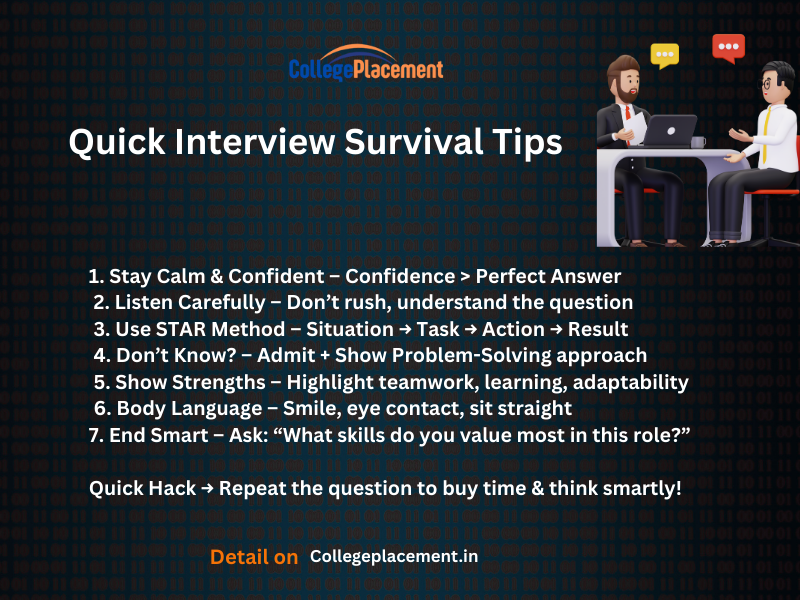
5. Use the STAR Method
When asked situational or behavioral questions, structure answers with STAR:
- Situation: Set the context.
- Task: What was required.
- Action: Steps you took.
- Result: Outcome.
Example:
Q: “Tell me about a time you solved a problem.”
STAR Answer:- Situation: Our team project was missing deadlines.
- Task: I had to improve coordination.
- Action: I introduced a shared Google Sheet and weekly check-ins.
- Result: We finished 3 days early.
Even without preparation, this formula makes you sound structured.
6. Buy Time When You’re Stuck
Sometimes, you need a few seconds to think.
How to do it:
- Use filler phrases:
- “That’s an interesting question, let me think for a moment.”
- “I want to give you the best example, so I’ll take a second.”
- Repeat the question to yourself before answering.
Quick Tip: Silence for 2–3 seconds is normal in interviews—don’t panic.
7. Ask Smart Questions Back
If you can’t shine in answers, shine in curiosity.
Example Questions:
- “What skills do you value most in this role?”
- “What are the growth opportunities in this position?”
- “How does this role contribute to the company’s goals?”
This shifts focus from your unpreparedness to your enthusiasm.
8. Share Stories Instead of Facts
You may forget technical definitions, but you’ll always remember your experiences.
Why it works:
- Stories are personal and unique.
- They reveal real skills, not memorized lines.
Example:
Instead of saying: “I’m a team player.”
Say: “During my college fest, I coordinated with 20+ people from different departments to manage sponsorships.”9. Focus on Body Language
Sometimes how you speak matters more than what you say.
Key Tips:
- Maintain eye contact.
- Sit straight, don’t slouch.
- Use open hand gestures.
- Smile genuinely.
Even if your answers are average, confident body language can win trust.
10. End with a Strong Closing Statement
First impressions matter, but last impressions seal the deal.
How to do it:
When they ask, “Do you have any final questions or comments?”
Say:
“Thank you for this opportunity. I’m excited about this role, and I believe I can learn fast, contribute effectively, and grow with your company.”This leaves them with positivity about you.
FAQs on Attending an Interview Without Preparation
Q1. Should I skip an interview if I’m unprepared?
No. Always attend. Even if you don’t get selected, it’s a practice run and builds confidence.Q2. What if I don’t know most of the technical questions?
Be honest, redirect to willingness to learn, and highlight soft skills.Q3. How do I look confident if I feel unprepared?
Good posture, steady eye contact, clear speech, and a smile can make you look confident—even if you’re nervous inside.Q4. Can personality really outweigh preparation?
Yes. Recruiters often choose candidates for attitude, cultural fit, and learning potential—not just memorized knowledge.Walking into an interview unprepared feels scary—but it’s not the end of the world.
With the right hacks—like staying calm, dressing sharp, being honest, and turning questions into conversations—you can still leave a positive impression.Remember: interviews are not exams; they are conversations. Recruiters want to see your adaptability, not perfection.
So, the next time you face an interview without preparation—don’t cancel.
Show up, stay confident, and let your personality do the talking.Need personal guidance for your upcoming interview?
College Placement Email us at info@collegeplacement.in for one-on-one assistance, tailored tips, and career advice.RELATED POST
- How to Create an ATS-Friendly Resume in 2025/2026
Every day, thousands of qualified candidates get rejected before any human even sees their resume. The reason? Their resumes can’t pass through Applicant Tracking Systems (ATS). In today’s job market, where 98% of Fortune 500 companies use ATS software, creating an ATS-friendly resume isn’t optional—it’s essential for landing interviews.
What is an ATS-Friendly Resume?
An ATS-friendly resume is a document specifically formatted and optimized to be easily read and parsed by Applicant Tracking Systems. These software programs scan resumes for keywords, qualifications, and relevant experience before human recruiters ever see them. If your resume isn’t ATS-optimized, it might never reach human eyes, regardless of how qualified you are.
Understanding ATS systems is crucial for job seekers in India, where companies like TCS, Infosys, Wipro, and international corporations rely heavily on these systems to filter through thousands of applications daily.
Why ATS-Friendly Resumes Matter More Than Ever
The job application process has changed dramatically. Here’s what happens when you submit your resume:
- ATS Scanning: Software scans your resume for keywords and formatting
- Ranking Process: System ranks candidates based on relevance scores
- Human Review: Only top-ranked resumes reach recruiters
- Interview Selection: Recruiters review ATS-approved candidates
Without ATS optimization, even highly qualified candidates get filtered out at step one. This is particularly important in competitive fields like IT, engineering, finance, and healthcare where companies receive hundreds of applications for single positions.
Essential ATS-Friendly Resume Formatting Rules
Choose the Right File Format
Always submit your resume as a .docx or .pdf file. Most ATS systems handle these formats well, but .docx is generally safer. Avoid .txt, .rtf, or image-based formats that can cause parsing errors.
Use Standard Section Headers
ATS systems look for specific section headers. Use these exact terms:
- Professional Summary (not “About Me” or “Profile”)
- Work Experience (not “Employment History” or “Career Journey”)
- Education (not “Academic Background”)
- Skills (not “Core Competencies” or “Expertise”)
- Certifications (if applicable)
Keep Formatting Simple and Clean
Fancy designs confuse ATS systems. Follow these formatting guidelines:
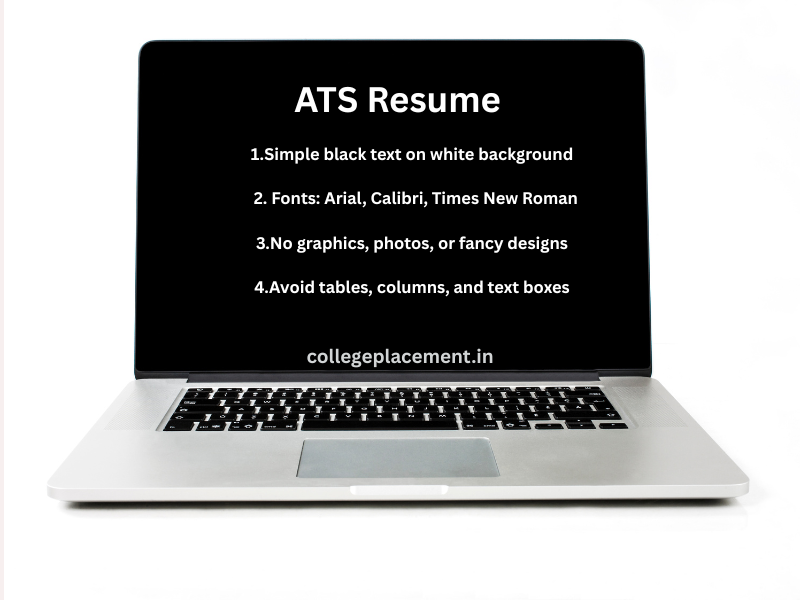
- Use standard fonts like Arial, Calibri, or Times New Roman
- Stick to font sizes between 10-12 points
- Avoid headers, footers, text boxes, and columns
- Don’t use images, graphics, or logos
- Skip fancy bullets—use simple round bullets or hyphens
- Maintain consistent spacing throughout
Structure Your Content Properly
Organize information in reverse chronological order. Start with your most recent experience and work backwards. This format is familiar to both ATS systems and human recruiters.
Keyword Optimization Strategies That Work
Research Job-Specific Keywords
Every job posting contains valuable keywords. Here’s how to identify them:
- Read job descriptions carefully: Look for repeated skills, qualifications, and requirements
- Study multiple similar postings: Find common keywords across different companies
- Use industry-specific terms: Include technical skills, software names, and methodologies
- Add variations: Include both acronyms and full forms (e.g., “SEO” and “Search Engine Optimization”)
Strategic Keyword Placement
Place keywords naturally throughout your resume:
- Professional Summary: Include 3-5 key skills and qualifications
- Skills Section: List both hard and soft skills mentioned in job postings
- Work Experience: Incorporate keywords when describing achievements
- Education: Include relevant coursework, projects, and certifications
Industry-Specific Keywords for Indian Job Market
For IT Professionals:
- Programming languages (Java, Python, JavaScript)
- Frameworks (React, Angular, Spring Boot)
- Databases (MySQL, MongoDB, Oracle)
- Cloud platforms (AWS, Azure, Google Cloud)
- Methodologies (Agile, Scrum, DevOps)
For Business Professionals:
- Analytics tools (Excel, PowerBI, Tableau)
- Project management (PMP, Six Sigma)
- CRM systems (Salesforce, HubSpot)
- Digital marketing (Google Analytics, SEM, SEM)
Writing Compelling ATS-Friendly Content
Craft a Powerful Professional Summary
Your professional summary should be 3-4 lines that include:
- Years of experience
- Key skills and expertise
- Industry or domain knowledge
- Career objective aligned with the target role
Example: “Results-driven Software Engineer with 5+ years of experience in Java development, Spring Boot, and microservices architecture. Proven track record of delivering scalable web applications for e-commerce and fintech sectors. Seeking to leverage expertise in cloud technologies and agile methodologies to drive innovation at a forward-thinking technology company.”
Quantify Your Achievements
ATS systems and recruiters love measurable results. Transform generic statements into powerful achievements:
Instead of: “Responsible for managing social media accounts” Write: “Managed 5 social media accounts, increasing engagement by 40% and follower growth by 25% within 6 months”
Instead of: “Developed software applications” Write: “Developed 3 web applications using React and Node.js, reducing processing time by 30% and serving 10,000+ daily users”
Use Action Verbs Effectively
Start each bullet point with strong action verbs that ATS systems recognize:
- Achieved, Implemented, Developed, Managed, Led
- Optimized, Streamlined, Enhanced, Delivered, Created
- Analyzed, Designed, Coordinated, Executed, Improved
Common ATS Resume Mistakes to Avoid
Formatting Errors That Kill Your Chances
- Using tables or columns: ATS systems often can’t read tabular data correctly
- Creative layouts: Fancy designs confuse parsing algorithms
- Non-standard fonts: Stick to common, readable fonts
- Images and graphics: These elements can’t be processed by ATS
- Special characters: Avoid symbols that might cause parsing errors
Content Mistakes That Reduce Your Score
- Keyword stuffing: Don’t artificially cram keywords—use them naturally
- Generic content: Customize your resume for each application
- Spelling errors: ATS systems are sensitive to typos and misspellings
- Inconsistent formatting: Maintain uniform styling throughout
- Missing contact information: Ensure your phone number and email are clearly visible
ATS-Friendly Resume Templates and Structure
Recommended Resume Structure
Header Section:
- Full name (larger font)
- Phone number
- Professional email address
- LinkedIn profile URL
- City, State (don’t include full address)
Professional Summary: (3-4 lines)
Skills Section: (organized by category)
Work Experience: (reverse chronological order)
- Job title
- Company name
- Employment dates
- 3-5 bullet points describing achievements
Education:
- Degree type and major
- University name
- Graduation year
- Relevant coursework (if recent graduate)
Certifications: (if applicable)
Testing Your ATS-Friendly Resume
Free ATS Testing Tools
Before submitting applications, test your resume using these free tools:
- Jobscan.co – Compares your resume against job descriptions
- ResumeWorded – Provides ATS compatibility scores
- SkillSyncer – Analyzes keyword optimization
Manual Testing Method
- Copy your resume content and paste it into a plain text editor
- Check if all information appears correctly
- Ensure formatting doesn’t break or become unreadable
- Verify that all sections and content are preserved
Advanced ATS Optimization Tips
Customize for Each Application
Never use the same resume for every job application. Customize your resume by:
- Adjusting keywords based on job requirements
- Reordering skills to match job priorities
- Modifying your professional summary
- Highlighting relevant experience for each role
LinkedIn Profile Alignment
Ensure your LinkedIn profile matches your resume information. Many ATS systems cross-reference social profiles, and inconsistencies can raise red flags.
Follow Application Instructions
Some companies provide specific submission guidelines. Always follow these instructions exactly:
- Use requested file formats
- Include specific information in file names
- Submit through designated channels
- Include required documents or cover letters
Frequently Asked Questions About ATS-Friendly Resumes
What is an ATS system and why should I care?
An ATS (Applicant Tracking System) is software that companies use to automatically scan and filter resumes before human recruiters see them. You should care because 98% of Fortune 500 companies and most Indian IT companies like TCS, Infosys, and Wipro use ATS systems to manage thousands of applications.
How do I know if a company uses ATS?
Most medium to large companies use ATS systems. If you’re applying through company websites, job portals like Naukri.com, or seeing job postings that ask you to “upload your resume,” they likely use ATS. Startups and very small companies might still review resumes manually.
What file format should I use for my ATS resume?
Use .docx format as your first choice, followed by .pdf. Avoid .txt, .rtf, .jpg, or .png formats. Most Indian companies prefer .docx files as they’re easier for ATS systems to parse correctly.
Can I use colors and fancy designs in my ATS resume?
No, avoid colors, fancy designs, graphics, or creative layouts. ATS systems can’t read these elements properly. Stick to black text on white background with simple, clean formatting using standard fonts like Arial or Calibri.
How many keywords should I include in my resume?
There’s no magic number, but naturally include 15-25 relevant keywords throughout your resume. Focus on skills, technologies, and qualifications mentioned in the job description. Don’t stuff keywords unnaturally—use them in context.
Should I include a photo in my ATS resume?
Never include photos in ATS resumes. Photos can’t be read by ATS systems and may cause parsing errors. In India, unlike some other countries, photos on resumes are becoming less common and aren’t necessary for most roles.
What’s the ideal length for an ATS-friendly resume?
For fresh graduates: 1 page For experienced professionals (2-5 years): 1-2 pages For senior professionals (5+ years): 2 pages maximum ATS systems can handle multiple pages, but keep content relevant and concise.
Can ATS systems read PDF files?
Modern ATS systems can read PDFs, but .docx files are generally safer. If you must use PDF, ensure it’s text-based (not scanned images) and created from a word processor, not designed in tools like Canva or Photoshop.
How do I find the right keywords for my resume?
Read 5-10 job descriptions for your target role, highlight repeated skills and requirements, use both full forms and abbreviations (like “Search Engine Optimization” and “SEO”), and include industry-specific terms and software names.
Should I customize my resume for each job application?
Yes, absolutely! Customize your resume for each application by adjusting keywords, reordering skills based on job priorities, and modifying your professional summary to match the role requirements. This significantly improves your ATS score.
What are the most common ATS mistakes Indian job seekers make?
Using creative templates downloaded from design sites, including tables and columns in their resume format, not including enough relevant keywords from job descriptions, using images or logos of previous companies, and submitting the same resume for every job without customization.
How can I test if my resume is ATS-friendly?
Use free tools like Jobscan.co, ResumeWorded, or SkillSyncer to test your resume. You can also copy-paste your resume into a plain text editor—if it looks readable and maintains structure, it’s likely ATS-friendly.
Your Action Plan for ATS Success
Creating an ATS-friendly resume is just the first step. Here’s your complete action plan:
- Audit your current resume against ATS guidelines
- Research keywords for your target positions
- Rewrite content with optimized keywords and formatting
- Test your resume using free ATS tools
- Start applying with your optimized resume
In today’s competitive job market, an ATS-friendly resume isn’t just helpful—it’s essential. By following these guidelines, you’ll ensure your qualifications reach human recruiters who can appreciate your skills and experience.
Remember, the goal isn’t to trick the system but to present your qualifications in a format that both ATS software and human recruiters can easily understand and appreciate. Start optimizing your resume today, and watch your interview invitation rate increase dramatically.
Your dream job is waiting for a resume that can successfully navigate the digital gatekeepers. Make sure yours is ready for the challenge.
Read More
How to Crack Off-Campus Placements in 2025
10 Interview Secrets That Land You the Job Every Time
Placement & Internship Calendar 2025
TCS NQT: Most Asked Questions & Expert Answers
- 10 Interview Secrets That Land You the Job Every Time

Every year, lakhs of talented people don’t get their dream jobs—not because they’re not good enough, but because they don’t know the simple tricks that turn interviews into job offers. After studying thousands of successful interviews in both IT and non-IT companies, we’ve found the secrets that help candidates get selected every time.
Secret 1: Do Your Homework Like a Detective
Most people just read the company’s website and think they’re ready. Smart candidates do much more. They check three things: Basic Info (what the company does), Recent News (latest updates, new projects), and Inside Info (employee reviews, company problems).
This helps you ask smart questions like “I saw that your company just opened a new office in Bangalore. How will this help the team grow?” Such questions show you really care about the company.
Secret 2: Tell Stories That Show Results
Don’t just say “I’m good at teamwork.” Instead, tell a complete story with a problem, what you did, and what happened because of it. Make it simple but powerful.
For example: “My team was missing deadlines because of poor communication. I started daily 15-minute meetings. This reduced delays by 75% and saved the company ₹5 lakhs in extra costs.”
Secret3: Interview Them Back
Here’s something most people don’t know: good companies want candidates who ask questions too. When you ask about their challenges, growth plans, and team culture, you show confidence and real interest.
Ask questions that make them think, like “What’s the biggest challenge your team is facing right now?” This makes you look like a problem-solver, not just a job seeker.
Secret 4: Explain Complex Things Simply
Whether you’re in tech or any other field, you need to explain difficult things in easy words. Use the “explain to your mom” test—if your mother can’t understand what you’re saying, it’s too complicated.
For tech people, don’t just give the answer. Show how you think step by step. Interviewers want to see your thinking process, not just your knowledge.
Secret 5: Talk About What You’ll Do for Them
Most people only talk about their past work. Winners talk about how they’ll help the company in the future. Research their upcoming projects and connect your skills to their needs.
Say something like: “I saw that you’re planning to use AI in your products. My experience with data projects can help you launch this 30% faster.”

Secret 6: Share a Mistake You Learned From
Perfect people seem fake. Smart candidates share one mistake they made, what they learned, and how they made sure it won’t happen again. This shows you’re honest and always improving.
Choose a story where you made an error, fixed it, and became better because of it. This shows emotional intelligence that employers love.
Secret 7: Match Their Style
Pay attention to how your interviewer talks. If they like numbers and data, give them facts and figures. If they focus on relationships, talk about teamwork and collaboration.
This isn’t being fake—it’s being smart about communication. Adjust your answers to match what they want to hear while staying true to yourself.
Secret 8: Think Like You Already Have the Job
Instead of memorizing answers, imagine you’re already doing the job. Think about daily tasks, common problems, and how success is measured. This helps you give realistic answers.
When they ask “How would you handle this situation?” you’ll sound confident because you’ve already thought about actually doing the work.
Secret 9: Use Silence to Your Advantage
Most people are scared of quiet moments and rush to fill them. Confident candidates use pauses smartly. After asking a question, stay quiet and let them answer completely—you’ll learn valuable things about the company.
Also, when answering tough questions, take a moment to think. This shows you’re thoughtful, not just talking without thinking.
Secret 10: End Strong with Next Steps
Don’t end with “Any other questions?” Instead, use this formula: show excitement, summarize why you’re perfect for the job, ask about their timeline, and tell them when you’ll follow up.
Say: “I’m really excited about this role because my experience in [specific area] matches exactly what you need. What happens next in your process, and when should I check back with you?”
Why These Secrets Actually Work
These tricks work because hiring is emotional first, logical second. People hire candidates they like and trust, then find reasons to justify their choice. These secrets help create good feelings while giving solid reasons to choose you.
Remember: the interviewer wants to find the right person as much as you want the job. By showing preparation, confidence, and genuine interest, you make their decision easy.
How to Use These Secrets
Don’t try all 10 secrets in one interview—it will feel forced. Pick 3-4 that feel natural to you and match the job you’re applying for. Practice until they feel normal, then slowly add more techniques.
The best candidates make these strategies look effortless, like they’re just having a good conversation about work.
Your Action Plan for Interview Success
Now you know the 10 secrets that most candidates never learn. But knowing and doing are different things. Here’s your simple 7-day plan to master these techniques:
Day 1-2: Research your target companies using the 3-layer method Day 3-4: Prepare 5 powerful stories using the problem-solution-impact formula Day 5: Practice explaining your work in simple words with family/friends Day 6: Prepare smart questions to ask interviewers Day 7: Practice everything with mock interviews
Special Tips for Different Job Types in India
For Tech Jobs (IT, Software): get more
- Focus on problem-solving approach, not just coding skills
- Prepare to explain technical concepts to non-technical managers
- Show willingness to learn new technologies
For Non-Tech Jobs (Sales, Marketing, HR):
- Emphasize people skills and relationship building
- Share examples of achieving targets or solving people problems
- Show understanding of Indian market and customer mindset
For Fresh Graduates:
- Highlight projects, internships, and extra-curricular activities
- Show eagerness to learn and grow with the company
- Demonstrate basic professional skills and attitude
The Reality Check
Here’s the truth: 90% of candidates will read this and do nothing. They’ll bookmark it, share it, but won’t practice. The 10% who actually use these secrets will get the jobs.
Which group will you be in?
Take Action Right Now
Don’t wait for your next interview to start preparing. Begin today:
- Pick one company you want to work for and research them deeply
- Write down 3 achievement stories using the formula we taught
- Practice explaining your biggest accomplishment in simple words
- Schedule a mock interview with a friend this week
Remember: Every expert was once a beginner. Every successful person started where you are now. The only difference is they took action.
Your dream job isn’t just waiting for the right person—it’s waiting for someone who prepares the right way. These 10 secrets are your roadmap to interview success.
Stop hoping. Start preparing. Your future self will thank you.
Need help with job updates or career guidance? Drop a comment below!
Read More